TechNIK's Cyberdeck — Nik Reitmann
- Source: https://www.printables.com/model/551922-techniks-cyberdeck
- Category:
inspiration— cyberdeck STL; alternate silhouette / hinge & screen-mount reference - Role for KN-86: the second of two cyberdeck STL references in this batch (cyberdeck-adamow.md is the first). Provides an alternate silhouette take — different hinge geometry, different screen-mount approach — so the KN-86 bezel design has more than one published reference to triangulate against.
- License / caveats: Printables per-model license; check before remixing or printing-for-distribution. Aesthetic-reference relationship only here.
What it is
Section titled “What it is”Nik Reitmann’s TechNIK Cyberdeck is a free Printables STL set. The silhouette differs from Adamow’s — different hinge style, a more articulated screen mount, slightly different panel proportions. It sits in the same tactical-cyberpunk family as Adamow’s deck and the broader Cyberdeck Cafe gallery, but with enough silhouette delta that reading both together gives KN-86 a useful design space rather than a single template.
Note: TechNIK also appears as one of the gallery tiles in the Printables cyberdeck search — this entry is the dedicated reference to it as a specific design, not just an item in a list.
Key takeaways for KN-86
Section titled “Key takeaways for KN-86”- Alternate hinge geometry. Where Adamow’s deck shows one approach to lid-to-body articulation, TechNIK’s is different — different pivot point, different deflection range, different visible hardware. KN-86’s Pelican-1170 chassis has its own hinge (the Pelican shell’s), so neither of these is a literal port; but the design vocabulary (visible hinge hardware as part of the surface language, not hidden underneath chamfered shrouds) is the lesson. KN-86 should embrace the visible-hardware aesthetic the way both of these decks do.
- Screen-mount articulation. TechNIK’s screen-mount details — bezel, retention method, viewing angle — are more articulated than Adamow’s. Useful reference for the KN-86 primary display bezel (the 7″ Elecrow IPS panel mounted in the Pelican lid). The mounting approach we land on needs to hold the panel firmly without case modification, which is the Pelican-1170 commitment that constrains the geometry; reading TechNIK’s approach informs what a bezel can do within that constraint.
- Surface language consistency. Reading Adamow and TechNIK together confirms that the tactical-cyberpunk silhouette family is consistent across multiple independent designers — KN-86 lands in this family by design, not by accident. Worth a marketing-plan citation when the launch positioning gets scoped.
- Two reference points beats one. Having both Adamow and TechNIK in the corpus gives the KN-86 bezel designer two independent witnesses for “what an STL-published cyberdeck shell looks like in 2026.” That’s more useful than committing to either as a singular template.
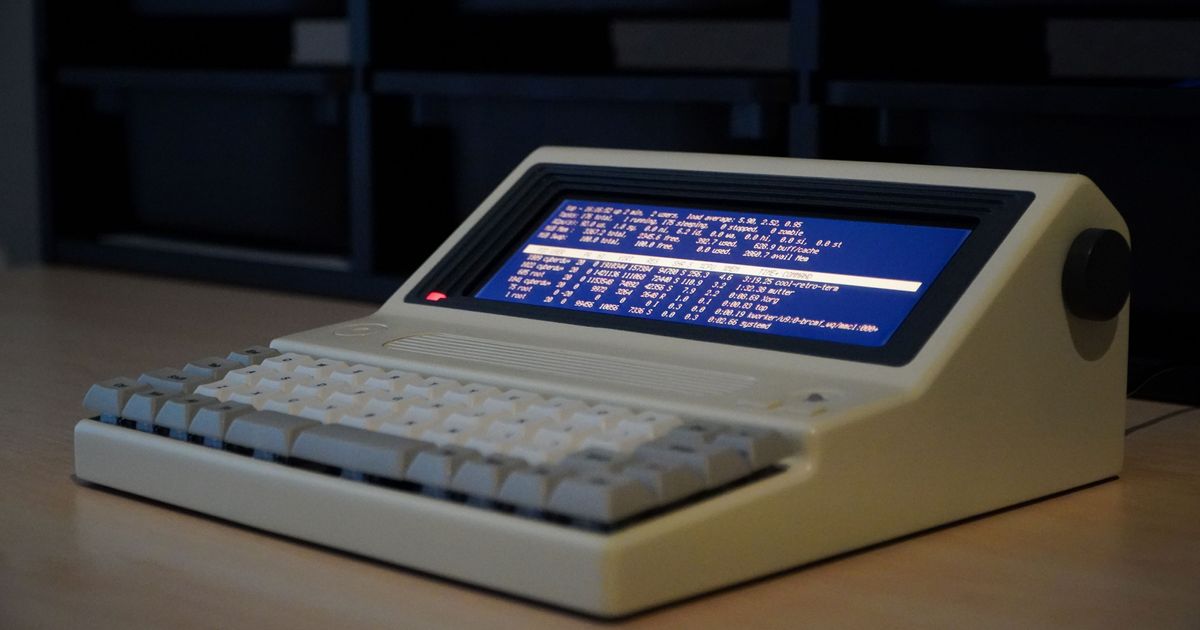
The Printables cover image. Shows the assembled deck in working context — keyboard well, screen in its mount, port arrangement.
- Cross-link cyberdeck-adamow.md — the companion cyberdeck STL reference; read both together.
- Cross-link cyberdeck-cafe.md — the broader community gallery; TechNIK also appears there.
- Cross-link printables-cyberdeck-search.md — TechNIK is also tile-visible in the search grid screenshot.
- Cross-link qrp-pi.md — the close-template Pelican-1170 build reference; Adamow + TechNIK are the broader silhouette family references that QRPπ sits inside.
- Cross-link keyboard-decision.md — the Sweep mounts inside the Pelican bezel; the bezel aesthetic draws from Adamow + TechNIK.