Ferris Sweep — holykeebs
- Source: https://holykeebs.com/products/ferris-sweep
- Category:
prototype— the chosen keyboard, per keyboard-decision.md - Role for KN-86: the input device. Mounts inside the Pelican-1170 chassis on a 3D-printed bezel insert.
- License / caveats: commercial product page — entry is a reference for the order target. The Ferris Sweep design itself (David Barr’s “Sweep”) is open-source hardware; the holykeebs revisions add hotswap sockets + diodes on the current PCB rev and are also open. Order from holykeebs, not from a fabhouse.
What it is
Section titled “What it is”The Ferris Sweep is a 34-key split mechanical keyboard — a David Barr variant of the Pierre Constant “Ferris Compact.” Two PCB halves connected by TRRS cable; each half is 17 keys laid out as four columns of three rows plus three thumb keys. No number row, no dedicated modifiers — every layout decision is downstream of QMK-or-equivalent layer firmware on the controller. The holykeebs revision is the current canonical commercial source: $27 base kit (pair of black PCBs, SMD diodes pre-populated, reset switches, TRRS jacks). Current PCB revision ships hotswap sockets so the operator can swap Kailh Choc v1 family switches without desoldering.
Key takeaways for KN-86
Section titled “Key takeaways for KN-86”- Proven, manufacturable, shipping today. No PCB-fab risk, no plate-tolerance bring-up cycle, no matrix-debouncing firmware authoring. Build the rest of the deck and order this.
- 34 keys vs. the canonical-spec 31 — the layout planning translates the KN-86 14-FN + 16-numpad + 1-TERM model into the Sweep’s 34 keys + QMK layers. The phone-layout numpad cluster from ADR-0016 needs reinterpretation against the split geometry (the cluster doesn’t survive the halves literally; the recognizable shape of it inside a layer might). Open question; tracked in keyboard-decision.md.
- RP2040 controllers are the holykeebs default — matches the KN-86 RP-family commitment (ADR-0017 Pi Pico 2 coprocessor is also RP-family). More flash than Pro Micro, well-supported by QMK + Vial.
- Hotswap means no switch commitment. Kailh Choc v1 family remains canonical; the operator can swap within family (linear / tactile / clicky variants) freely.
- Pointing device + OLED share one location, one per side. Means we can have one of: trackpoint on left + OLED on right; OR trackpoint on right + OLED on left; OR neither/either alone. Cannot have both on the same half. Tracked as an open question in keyboard-decision.md.
- Low-profile choc spacing (18×17mm) — matches the Choc v1 + MBK keycap commitment. Compact silhouette.
- 3D-printed case integrates with the Pelican-1170 build template. The Sweep’s case prints can be color-matched to the cyberdeck enclosure plan (Adamow cyberdeck STL, TechNIK cyberdeck STL).
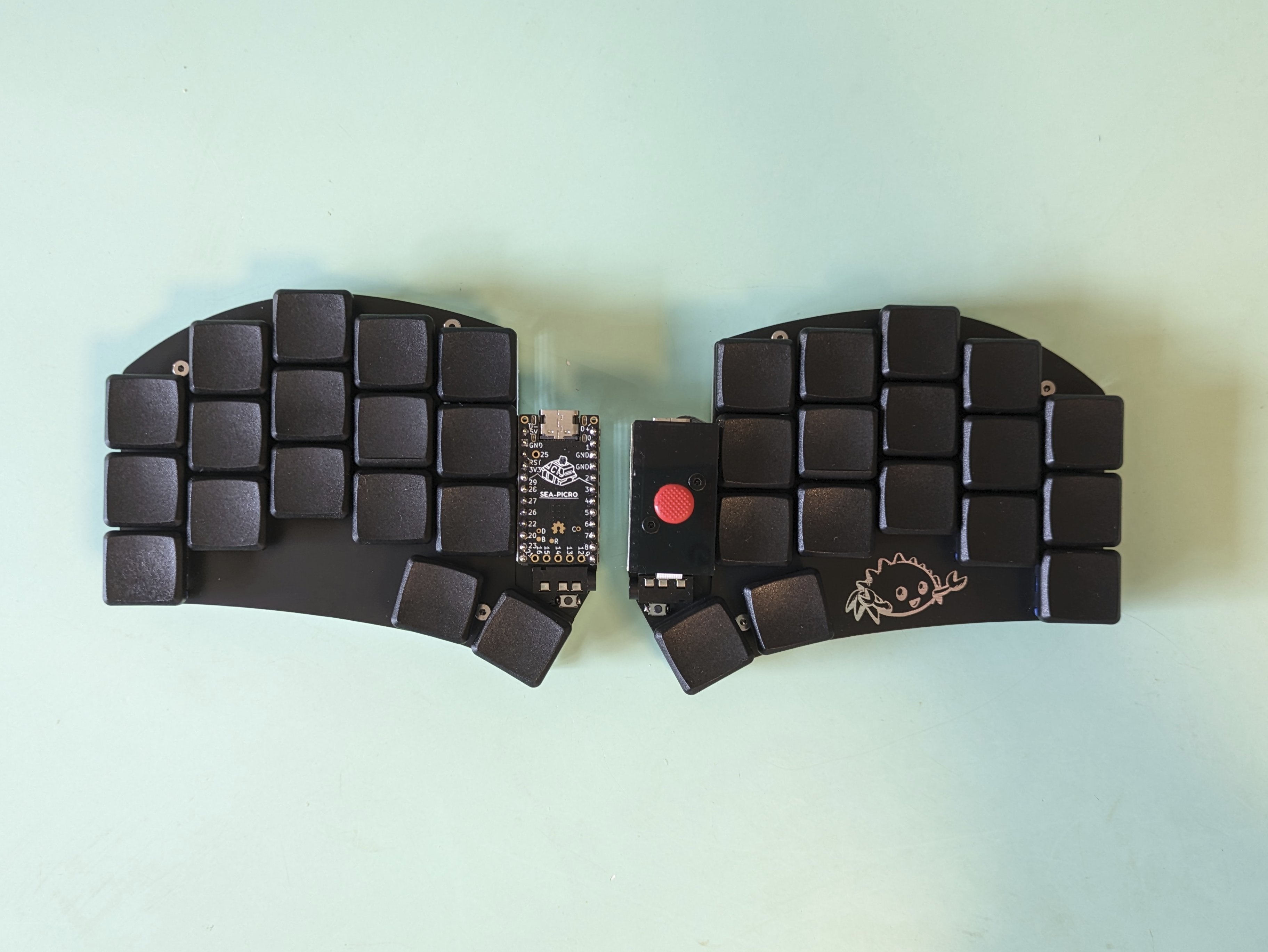
The base PCB pair as sold: black, 17 keys per half, USB-C controller daughterboard on each side, TRRS jack visible at the inner edge. The hotswap socket footprint is visible at each switch position.
Build variants — pointing device options
Section titled “Build variants — pointing device options”The three images below show holykeebs-built Sweeps in the three pointing-device configurations (trackpoint twice, trackball once), illustrating how the pointing-device module fits in the same location the OLED would otherwise occupy:
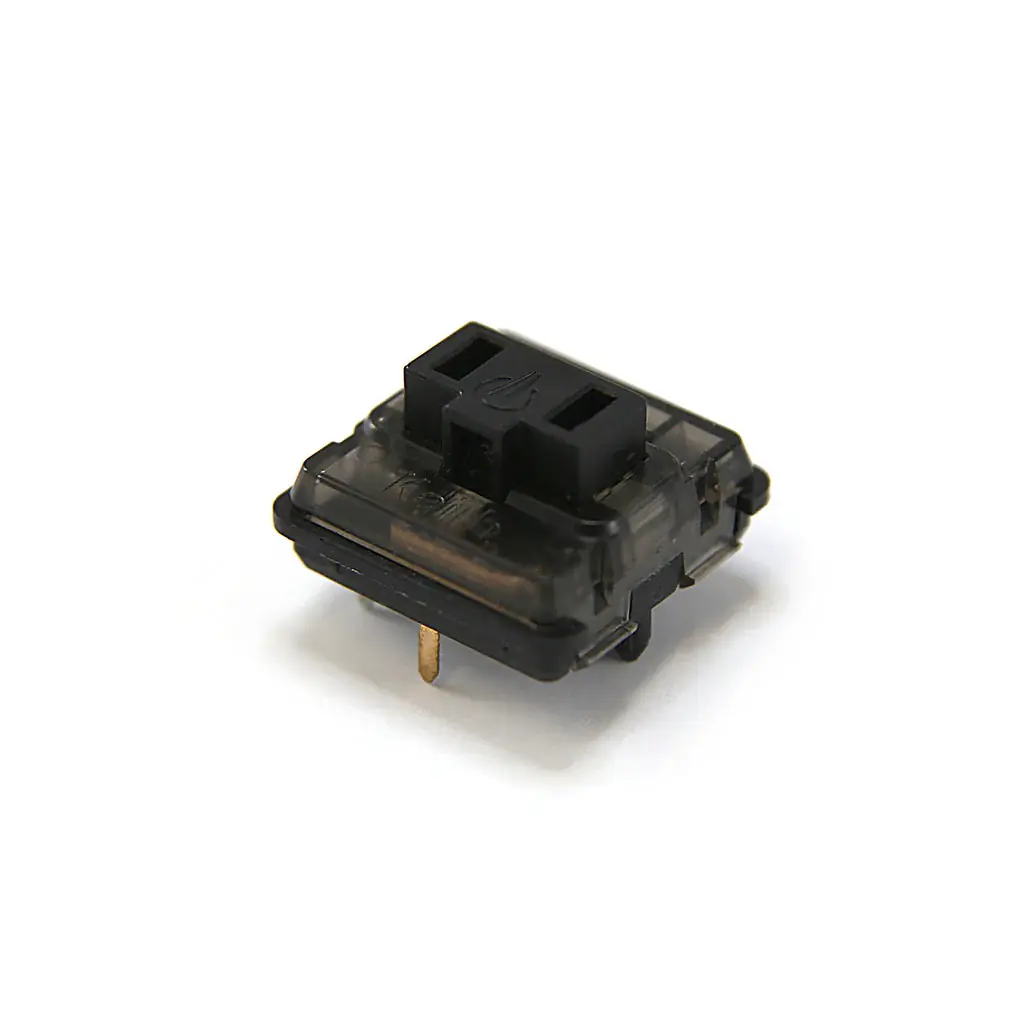
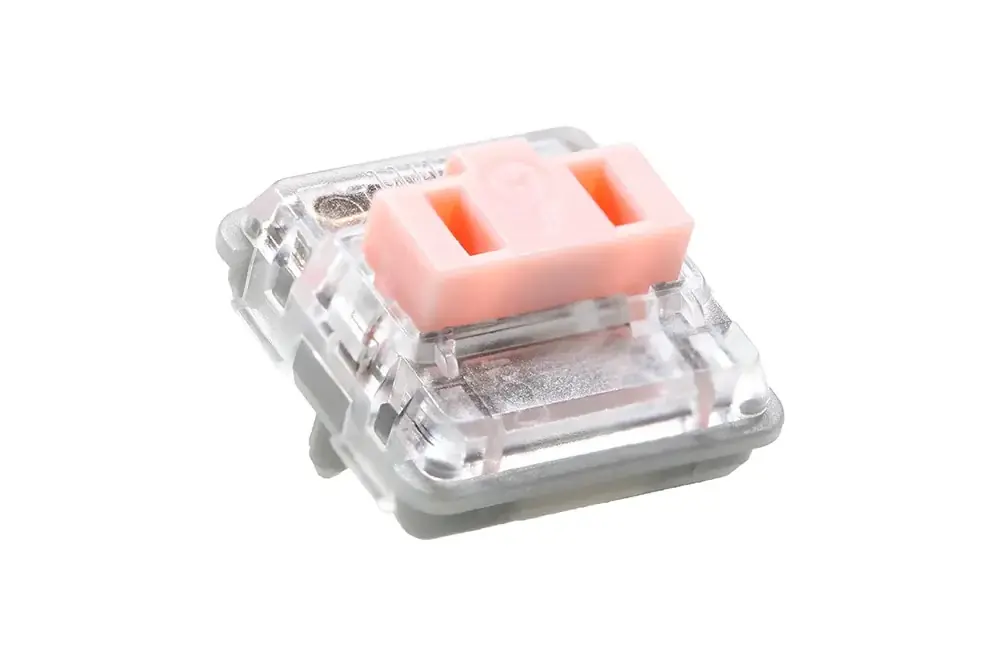
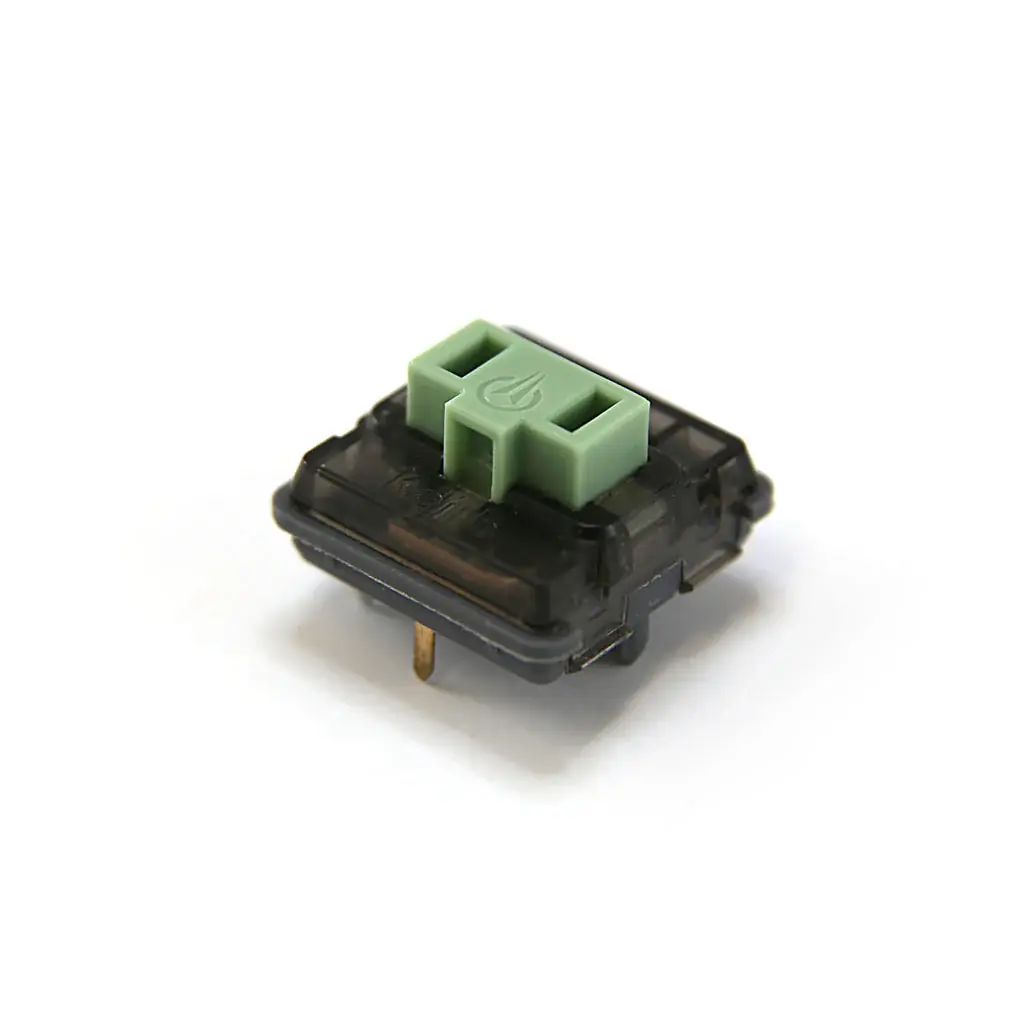
Trackpoint reads as the most laptop-recognizable option (right side of keyboard plate, between the thumb cluster and the alpha keys); trackball is a left-handed-friendly off-hand option but is the least accurate of the three; the TPS43 touchpad (not pictured) is the third option per the Buyer’s Guide.
- Cross-link keyboard-decision.md — the decision context this entry sits inside.
- Cross-link holykeebs-buyers-guide.md — the configuration matrix for the actual order.
- Cross-link qrp-pi.md — the Pelican-1170 structural build template the Sweep mounts inside.
- The Sweep’s 3D-printed case is independent of the Pelican-1170 enclosure — the Sweep’s case is the immediate housing for the input device; the Pelican is the outer chassis for the whole deck. The Sweep prints can sit inside the Pelican on a 3D-printed bezel that’s part of the larger inset-panel set per ADR-0019 + the QRPπ template.
- Direct cite candidate for an ADR-0024 update alongside keyboard-decision.md — the spec PR that aligns ADR-0024 + the Canonical Hardware Specification to this decision points here.